ecommerce website development case study in India – Baba Ji Ki Buti
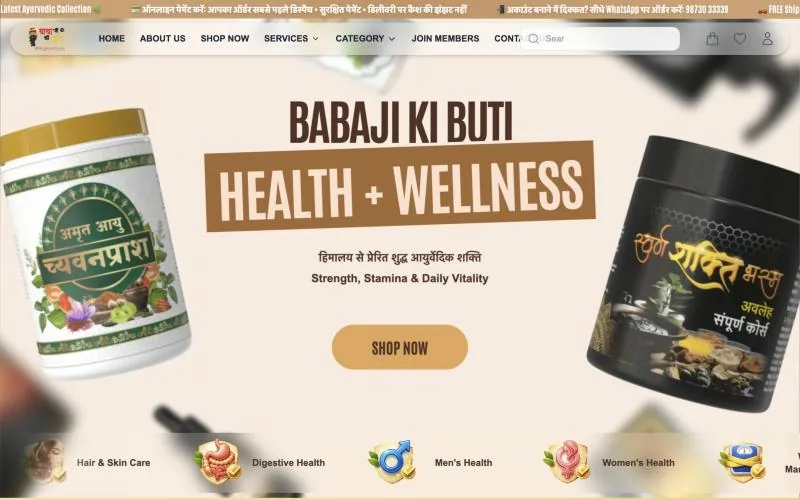
Baba Ji Ki Buti approached Govindani Infotech because the traditional wellness market they serve relies heavily on trust in product provenance and preparation. The existing e‑commerce solutions on the market forced the narrative about each remedy to sit far below the purchase button, making it difficult for customers to verify credibility at the moment they decide to buy. By building a custom‑coded storefront that places the story alongside the buy decision and by designing a checkout that directly addresses the doubts that typically cause abandonment, Govindani delivered a site that aligns the buying journey with the unique needs of the wellness sector.
The Challenge
Wellness products that are rooted in traditional preparation methods are not purchased on the basis of a photograph or a simple price tag. Buyers need to see clear information about where a product comes from, how it is prepared, and why it is trustworthy before they click “Buy”. The majority of off‑the‑shelf e‑commerce templates present a uniform layout where the product description follows the price and the “Add to cart” button. In that structure the essential narrative is pushed down the page, often beyond the point where the visitor’s attention is focused. As a result, potential customers either leave the page or proceed with lingering doubts, leading to higher abandonment rates.
For Baba Ji Ki Buti the problem was twofold:
- Layout constraints of template stores – every template forces the same visual hierarchy, making it impossible to give the provenance and preparation details the prominence they require.
- Checkout uncertainty – the checkout process in most generic solutions simply collects payment details without explicitly reassuring the buyer about delivery expectations or the authenticity of the product, which fuels further doubt.
The client needed a solution where the story and the purchase decision coexist on the same screen, and where the checkout experience directly mitigates the concerns that are unique to traditional wellness products.
What Govindani Built
Govindani Infotech responded by developing a completely custom‑coded storefront rather than adapting an existing theme. This approach removed the restrictive layout rules that are typical of template‑based stores. The new design positions the provenance and preparation narrative right beside the purchase button, ensuring that the buyer can read the essential information at the exact moment they decide to add the item to their cart.
Key elements of the build include:
- Custom‑coded storefront – a hand‑crafted front‑end that allows the placement of product stories exactly where they are needed, without being forced into a predetermined template grid.
- Provenance and preparation details beside the buy button – the critical trust‑building information is displayed in the same visual field as the purchase call‑to‑action, eliminating the need for the visitor to scroll further down.
- Integrated payment gateway – the checkout process incorporates a payment solution that works seamlessly with the rest of the site, allowing customers to complete their purchase without leaving the platform.
- Checkout designed to answer doubt – rather than merely collecting payment, the checkout page clearly states delivery expectations and reinforces the authenticity of the product, directly addressing the primary cause of abandonment in this category.
The result is a site that reflects the unique buying journey of wellness shoppers, where credibility and convenience are presented together.
You can explore the live implementation at the Baba Ji Ki Buti home page.
The Result
The custom solution delivers two clear outcomes:
- Narrative and purchase decision share the same screen – By placing the product story next to the buy button, customers no longer need to search for the information that validates their purchase. The layout ensures that the decision‑making and trust‑building elements are visually linked.
- Future catalogue or brand updates become simple edits – Because the site is not bound by a template’s rigid structure, adding new products, changing brand messaging, or updating the visual style can be performed through straightforward content edits rather than a full migration to a new theme.
These outcomes align directly with the client’s goal of reducing doubt‑driven abandonment and creating a flexible platform for ongoing growth.
What This Means If You Run a Similar Organisation
If your organisation sells products that depend on authenticity, heritage, or specialised preparation, the following practical takeaways may help you evaluate your own e‑commerce approach:
- Prioritise the placement of trust signals – Ensure that any information that establishes credibility—such as provenance, manufacturing process, or certifications—is positioned alongside the primary call‑to‑action. This reduces the cognitive effort required from the buyer.
- Avoid one‑size‑fits‑all templates – While templates can speed up launch, they often impose a visual hierarchy that may not suit niche markets. A custom‑coded front‑end gives you control over where critical content appears.
- Design checkout to reassure, not just collect payment – In categories where doubt is a major barrier, use the checkout page to restate delivery timelines, return policies, and authenticity guarantees. This can lower abandonment without altering price points.
- Plan for easy content updates – Build the site in a way that future product additions or brand changes are handled through simple edits rather than structural overhauls. This reduces long‑term maintenance costs and keeps the site agile.
- Integrate payment smoothly but keep the focus on trust – While a reliable payment gateway is essential, its presence should not dominate the user experience. Keep the payment step clear and concise, and pair it with reassurance messages.
By applying these principles, organisations can create e‑commerce experiences that respect the buyer’s need for information and confidence, leading to smoother transactions and a platform that can evolve alongside the business.
If you recognise similar challenges in your own digital store, feel free to reach out through our contact page for a discussion on how a custom approach could benefit your brand.
Frequently Asked Questions
How does a custom‑coded storefront differ from using a standard e‑commerce template?
A custom‑coded storefront is built from scratch, allowing complete control over the placement of elements such as product narratives, images, and buttons. In contrast, a template enforces a predefined layout that may not accommodate the specific storytelling needs of niche products.
Will the custom build affect site performance or loading times?
The build focuses on delivering the required content efficiently. By eliminating unnecessary template code and only including features that serve the business, the site can maintain performance levels comparable to well‑optimised template solutions.
Is the integrated payment gateway secure?
The payment gateway is integrated as part of the overall checkout flow, ensuring that payment information is handled through the provider’s secure processes. The integration respects the same security standards that a typical e‑commerce site would employ.
Can we add new products without involving a developer each time?
Yes. Because the site is not constrained by a rigid template, new product entries and updates can be made through the content management interface that Govindani set up, allowing staff to edit catalogue items directly.
What support is available after the site goes live?
Govindani Infotech offers post‑launch support for routine updates, troubleshooting, and minor enhancements. The aim is to keep the platform running smoothly and to assist with any adjustments that arise as the business evolves.